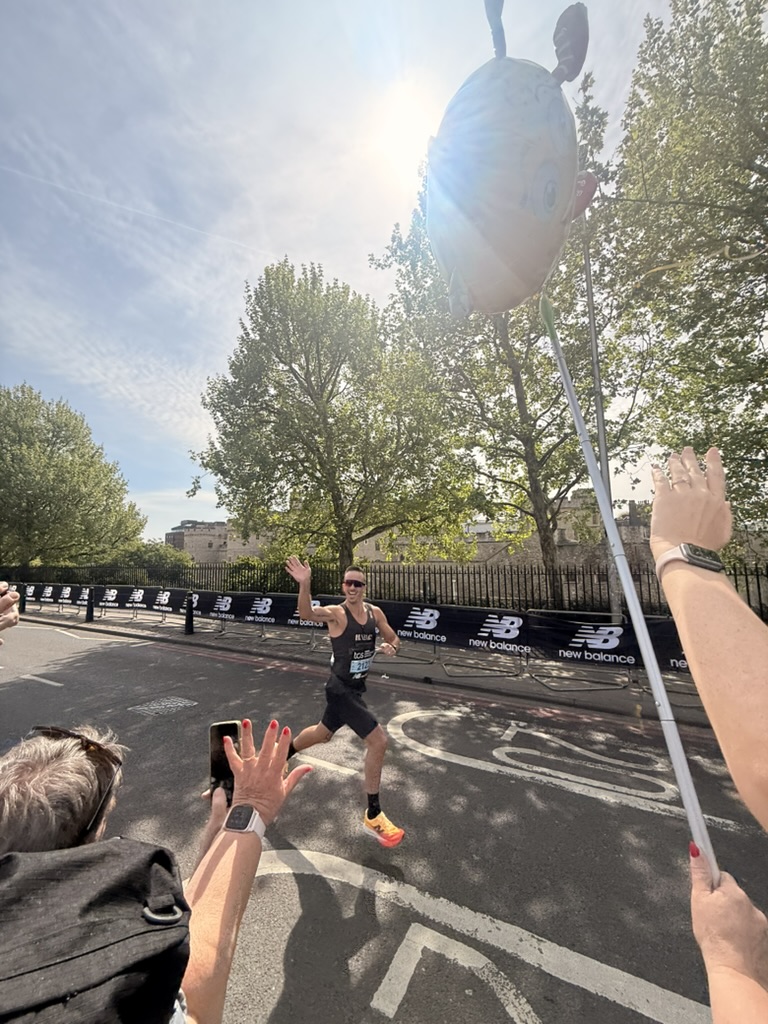
The London Marathon is a race I’ve now lined up for 11 times.
And somehow, it never gets old.
Every year brings something different. But this one felt bigger than just another race. It felt like a shift. Not just for me, but for the sport as a whole.
If you’re searching for insights on marathon pacing, race execution, or how to improve your marathon performance, this race captured all of it.
Why the London Marathon Feels Different
From the moment you step onto the start line, the energy is unmatched.
The crowds.
The noise.
The constant support from start to finish.
It’s not just a marathon. It’s one of the most unique endurance events in the world.
What stands out every year is the togetherness. Thousands of runners chasing personal goals alongside thousands more supporting, cheering, and raising money for meaningful causes.
That environment matters more than most runners realise.
It can carry you through tough patches, but it can also pull you out too fast if you don’t stay disciplined.
Which brings us to the most important part of any marathon.
Execution.
Marathon Pacing Strategy: Why Execution Matters More Than Fitness
From a personal perspective, this was one of those races where things clicked.
I ran 2:23:40, my second fastest marathon to date.
But the time wasn’t the most important part.
It was how the race felt.
Controlled from the start.
Patient through the middle.
Committed when it mattered.
This is what good marathon pacing looks like.
Most runners don’t struggle because of a lack of fitness, it comes down to poor execution.
Starting too fast
Delaying fuelling
Letting the crowd or other runners dictate pace
The marathon rewards discipline.
The runners who perform best are usually the ones who stay in control early and trust the process.
You Don’t Need to Feel Ready Before a Marathon
After the race, Sebastian Sawe said:
“I didn’t believe, but I was well prepared.”
That line sums up something most get wrong.
Runners wait until they feel confident before they trust their pacing or their ability.
But confidence does not come first.
Confidence is built through training.
It’s built through consistent sessions, long runs, and showing up on days when nothing feels special.
Most training days feel normal. Some feel hard. Very few feel exceptional.
That’s the reality of building marathon fitness.
The question is simple.
Can you keep showing up when there’s no immediate reward?
Because over time, that consistency becomes your evidence.
And on race day, that evidence is what you rely on.
A Historic Moment in Marathon Running
This year’s London Marathon was not just memorable. It was historic.
On the same course, Sebastian Sawe and Yomif Kejelcha broke through the 2 hour barrier in a marathon setting.
That’s something that, not long ago, felt impossible.
To be part of that race, even 24 minutes behind, was incredibly special.
But more importantly, it showed where the sport is heading.
The New Era of Marathon Performance
We are now seeing a shift in what marathon performance looks like.
This is not just about talent.
It is the result of multiple factors coming together:
Precision fuelling strategies
Advances in shoe technology
Smarter pacing and race execution
A deeper understanding of endurance physiology
Runners are no longer guessing their way through races.
They are preparing with intent.
Fuel plans are tested in training.
Pacing is practiced, not improvised.
Effort is controlled, not chased.
This is what is pushing the sport forward.
What This Means for Your Marathon Training
If you are training for a marathon, this is where your focus should be:
Build your aerobic base through consistent mileage.
Practice your marathon pacing in long runs.
Dial in your fuelling strategy before race day.
Learn to run easy when it is required.
Most importantly, focus on execution.
Fitness gets you to the start line.
Execution determines what happens after 30km.
What Comes Next?
For me, it’s time to step back slightly.
Recover.
Reset.
Let the race settle.
Then it’s back to building again into summer training.
Because progress in running is not about one race.
It’s about what you do consistently over time.
Show up.
Stack the reps.
Trust the work.
Work With Me
If you’re looking to improve your marathon time, run your first marathon, or simply want a structured plan that actually works, this is exactly what I help runners with.
Through personalised coaching, I focus on:
Building your fitness with the right structure.
Improving your pacing and race execution.
Dialling in fuelling and race strategy.
Helping you stay consistent and injury free.
If you want to take your running to the next level, then get in touch through the link in below.
 Daniel Bagley | Running Coach
Leave a comment