Tag: fitness

  • Sometimes Taking a Step Back Helps You Run Forward Better

    Sometimes Taking a Step Back Helps You Run Forward Better

    In running, we are often conditioned to believe that progress only comes from doing more.

    More miles.
    More sessions.
    More races.
    More consistency.

    But anyone who has trained seriously for long enough knows this is not the full picture.

    Sometimes, the smartest thing a runner can do is take a small step back. Not to lose fitness, but to create space to move forward with more clarity, purpose, and long term progress.


    Why Runners Struggle to Step Back

    Running is simple. That is part of its appeal.

    You lace up, head out the door, and get the work done. Over time, that consistency builds fitness, confidence, and identity. The problem is that this simplicity can make it hard to stop.

    There is always another race coming up.
    Another training block to roll into.
    Another reason to just keep going.

    For many runners, especially those balancing work, family, and life pressures, stepping back can feel like quitting. In reality, it is often the opposite.


    Training Stress Only Works If You Recover From It

    Training creates stress. Recovery creates adaptation.

    Every hard session places a demand on the body. Muscular, metabolic, hormonal, and neurological. The body does not get fitter during the session itself. It gets fitter in the hours and days that follow, when it is given enough space to adapt.

    When training stress builds without enough recovery, a few things start to happen:

    Fatigue accumulates
    Performance plateaus
    Motivation drops
    Injury risk increases

    At that point, pushing harder rarely fixes the problem.

    Stepping back, even briefly, allows the body to absorb the work you have already done and become responsive to training again.


    Stepping Back Does Not Mean Stopping

    This is where many runners get it wrong.

    Taking a step back does not have to mean doing nothing. In fact, for most runners, a managed reduction is far more effective than a complete stop.

    This might look like:

    Reducing overall weekly volume
    Pulling back on intensity
    Replacing hard sessions with easy, relaxed runs
    Removing pressure around pace and performance

    The goal is not to hold peak fitness all year round.
    The goal is to build sustainable progress over time.


    Why This Matters Long Term

    Running progress is not linear.

    There are phases where you build, phases where you maintain, and phases where you reset. Ignoring the reset phases is often what leads runners into cycles of stagnation, burnout, or recurring injuries.

    A short, intentional step back can:

    Refresh the body
    Restore motivation
    Improve how your body responds to future training
    Set you up to train better, not just harder

    This is especially important in warmer climates like Dubai, where managing load, recovery, and heat stress plays a big role in long term development.


    The Mental Side of Stepping Back

    Training is not just physically demanding. It is mentally taxing too.

    When running starts to feel like a chore rather than a choice, that is often a sign the system needs a reset. Stepping back slightly can help you reconnect with why you started running in the first place.

    It allows space to:

    Enjoy easy movement again
    Remove constant performance pressure
    Focus on sleep, nutrition, and recovery habits
    Build excitement for the next phase

    Missing training a little is not a weakness. It is often the spark that reignites progress.


    A Step Back With Purpose

    The key difference between productive and unproductive breaks is intent.

    Random stops lead to frustration.
    Planned pull backs lead to progression.

    When stepping back is done with purpose and aligned to your goals, your experience level, and your life, it becomes a powerful tool rather than a setback.

    Sometimes, taking a few steps back is exactly what allows you to run forward better.


    Need Help Knowing When to Step Back?

    One of the biggest challenges for runners is knowing when to push and when to ease off. That is where structured coaching can make the difference between guessing and progressing.

    If you are unsure whether now is a time to build, hold, or reset, feel free to reach out. A small adjustment at the right time can completely change the direction of your training.
  • Berlin Marathon 2025: Lessons From the Brandenburg Gate

    Berlin Marathon 2025: Lessons From the Brandenburg Gate

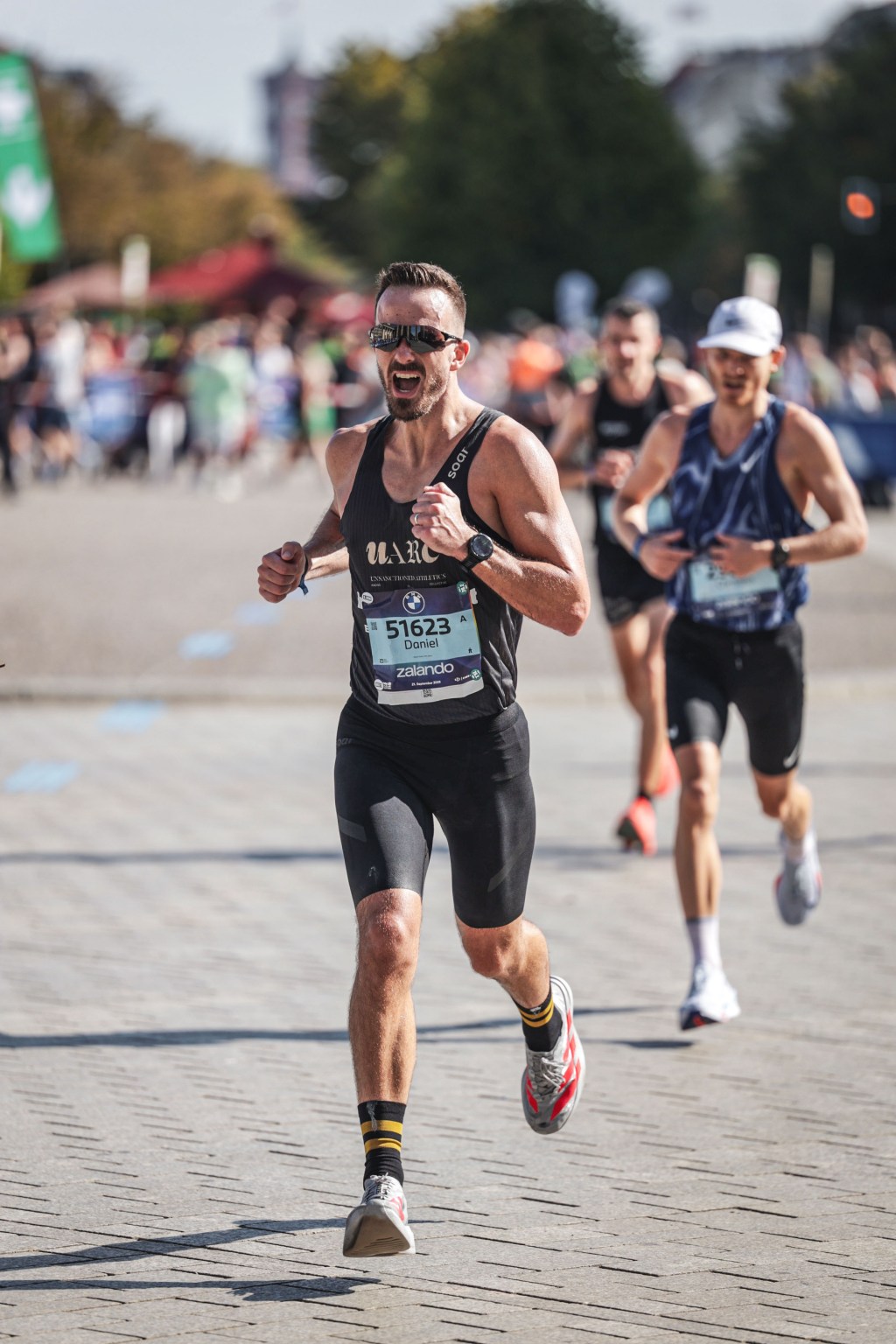
    Running the Berlin Marathon on September 21st, 2025, was my third World Major and my fourteenth marathon to date. It was one of the most eye-opening experiences of my running journey so far.

    Preparing for this race across the summer in Dubai presented a challenge, but not a new one as I had already trained in the later half of the summer into Valencia last year. This meant the way my training week was set up was much improved, but still somewhat an exploratory block, mainly due to planned higher use of the treadmill for quality sessions.

    I wanted this block to test me more than before. I know to progress the training needs to push me, of course, but all of the other areas in life and work also need to allow for that too.


    A Global Stage

    Berlin carries a reputation like few others. It is a course where world records are set, the course every marathoner has heard about. The days leading into the race were full of energy: the buzzing expo, shakeout runs passing the Brandenburg Gate, and thousands of runners from across the world converging on the city. For me and many others, standing on that start line was not just about Berlin, we were there to collect another star in the journey to running all of the Majors.

    The weather forecast showed higher temperatures than ideal, but I tried to ignore it. My training block had gone too well to be derailed by the weather now. That, and the fact that about four days out from the race I had picked up a cold I just could not quite shake.


    The Race

    Getting to the start line was straightforward until it wasn’t. Thousands of runners wanted to be as close to the front as possible, and barriers were pushed over in attempts to secure a good position.

    Even in those final moments walking to the start, you could feel the warmth in the air. It was by no means a cool race day, and I knew it would only get warmer. Carrying a little of the cold I had not fully shaken off, I felt the usual cocktail of nerves and excitement. From an emotional standpoint, I made no change to how I had planned to race. No adjustment to the pace, just the decision to stick to the targets I had worked toward all summer, knowing that something along the way could still challenge that.

    Pacing felt smooth for the first 5–10km, giving me a false sense of confidence that the weather might not be too much of a factor. I saw Ellis at 7.5km and felt invincible.

    I sat in with a group of about seven or eight others, ticking along steadily, but somewhere around 15–18km that group dispersed. I could feel the effort required to hold the pace climbing quickly.

    I decided to keep pushing until halfway and then reassess. I knew I would see Ellis again at around 19km, which would give me a boost and time to rethink if things began to fade. But inevitably, the same effort saw the pace start to slip.

    From 23km, I made the tough but honest decision: continuing to push at that level of effort would not end well. I accepted what I had already suspected from a few days earlier, the combination of the lingering cold and the heat meant I would have to run the second half slower than I had planned. Something clicked in that moment and I was at peace with it. I thought: you know what Daniel, it is either sulk or enjoy running around the closed streets of Berlin with 50,000 others.

    That acceptance did not make the last 19km any easier. My ears started to block up and the temperature continued to rise. But I remember the second half of the race clearly, head up, eyes open, taking in the sights and the crowds.

    Running through the Brandenburg Gate was unforgettable. I asked myself: if I had still been chasing a time, would I even have looked up to take it in?

    Finishing my 14th marathon and 3rd World Major in the way I did did not disappoint me at all. I do not regret racing the way I did. Playing it safe is not in my nature as an athlete, though it is something I know I need to consider more often when I have my coaching hat on.


    Five Lessons From Berlin

    1. Variation keeps you engaged.
    This block reminded me that training does not need to be completely repetitive to be effective. With Dubai’s summer heat limiting outdoor options, I leaned heavily on the treadmill for quality sessions and mixed up my approach more than ever before. Far from being a compromise, it actually kept me excited and motivated. Adapting to the environment, finding new ways to get the work done, and embracing variety kept the training fresh and showed me that progress comes in many forms.

    2. Adapting the plan can change the race.
    Berlin showed me that sticking rigidly to a pre-set plan does not always serve you on the day. The conditions were warmer than ideal, and I went out with pacing goals that did not reflect that reality. Looking back, if I had adapted earlier, eased back, adjusted fuelling, managed effort instead of chasing splits, it could have been a different type of race altogether. Sometimes the strongest choice is not to stick to the plan, but to flex with the circumstances.

    3. Joy is as important as discipline.
    For much of this block, I was locked in on the goal: another fast marathon, another performance benchmark. But when your focus narrows too much, it can drain energy from the other things that matter, like coaching, relationships, even just the day-to-day enjoyment of training. Berlin reminded me that while discipline is essential, it should not come at the cost of joy. Keeping perspective, sharing runs with others, and embracing the community are what give running its real value.

    4. Performance demands alignment.
    Running well is not just about the training plan on paper, it is an accumulation of everything around it. Sleep, recovery, stress, coaching, and daily life all feed into how you perform on the start line. In this block, there were times when the balance was not there, and it showed on race day. This marathon block reminded me that to reach your best, the rest of your life has to be aligned with the training. Without that, the lows come quicker, and the highs are harder to reach.

    5. The finish line is never the end.
    Crossing the Brandenburg Gate and the finish line, even on a day that was not perfect, was unforgettable. But every finish line is just another chapter, not the whole story. Each marathon is fuel for the next training block, the next challenge, and everything still to come. That is why we keep showing up.


    Looking Ahead

    Berlin did not give me the time I wanted, but it gave me something more valuable: perspective. Every marathon is a mirror, it shows you what is working, where the cracks are, and what you need to carry forward, and what you do not.

    That is why we keep coming back.

    The marathon is never just about 42.2 kilometres. It is about learning from and applying the lessons long after the race is done.

    And Berlin, with all its history, crowds, and challenges, handed me some of the most important ones yet.

  • Running a Marathon in a Shopping Mall: Dubai Mallathon

    Running a Marathon in a Shopping Mall: Dubai Mallathon

    Last weekend, I ticked off one of the most unique runs of my career so far: a marathon inside a shopping mall.

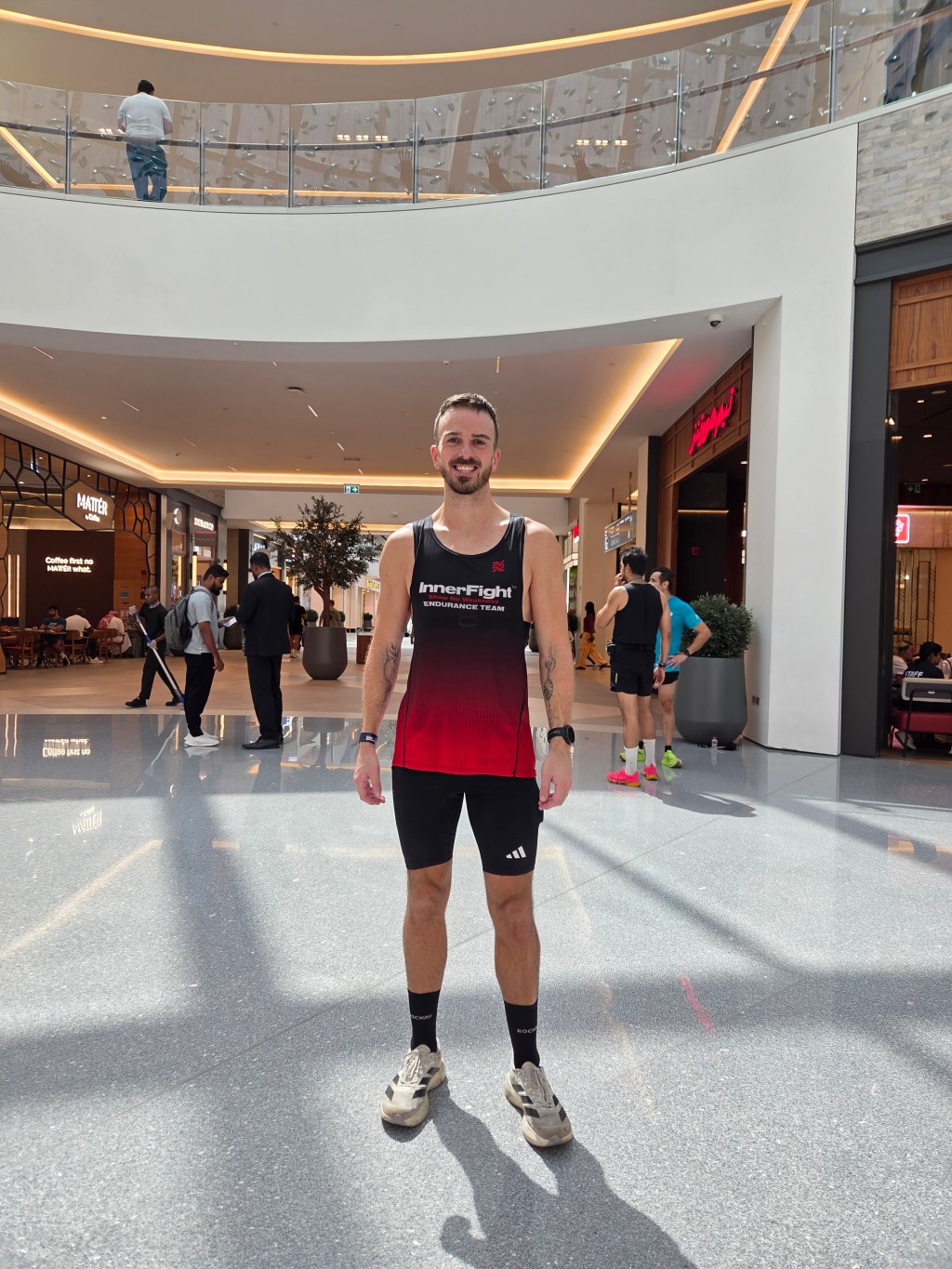
    Yes, you read that right. Seventeen laps of 2.5km each around Dubai Hills Mall as part of the Dubai Mallathon.

    What could have been just another long training run in my Berlin Marathon build-up turned into something much more. It was a reminder of how creative running initiatives in Dubai can transform training and keep the running community consistent and connected through the toughest months of the year.

    Why Run in a Mall in Dubai?

    Training for a marathon in Dubai means learning to adapt to one huge challenge every summer: the heat.

    With August temperatures regularly climbing above 40°C, many runners either back off their training or stop altogether until the cooler months return. That’s where the Dubai Mallathon steps in. Instead of fighting against the climate, it provides a solution by creating an indoor running space in Dubai that is safe, cool, and social.

    This isn’t just about clocking kilometres; it’s about keeping momentum alive when conditions outside make it almost impossible. For any runner training for an autumn marathon like Berlin, Chicago, or New York, events like this are a game changer.

    Running Community Over Kilometres

    The beauty of the Dubai Mallathon isn’t in the distance or the pace. Whether you run two laps or all seventeen, the important part is simply showing up and being part of the Dubai running community.

    Running indoors in a mall might sound unconventional, but that’s what makes it powerful. It breaks the monotony of treadmill sessions, eliminates the excuse of extreme weather, and most importantly, reminds you that running is always better when shared.

    For me, it wasn’t just about logging marathon miles. It was a reminder that training in Dubai’s summer can still be fun, engaging, and community-driven when the right opportunities are created.

    Why the Dubai Mallathon Matters

    Events like the Dubai Mallathon are more than just creative race ideas. They’re a lifeline for runners in Dubai who want to stay consistent through the heat. They allow athletes to stay on track with their marathon training plans, remain accountable, and enjoy the social side of running even in the middle of summer.

    And the best part? The Dubai Mallathon is completely free.

    That accessibility means runners of all levels can get involved. Whether you’re just starting out, running socially with friends, or training for your next marathon, there’s a place for you here.

    How to Get Involved

    If you’re based in Dubai and looking for ways to train smarter in the summer heat, I highly recommend giving this event a try.

    You can find out more and register here: www.dubaimallathon.ae

    Because whether it’s two laps or twenty, running in Dubai is always better when you show up, stay consistent, and do it together.


    👉 As a Dubai-based running coach, I help runners navigate challenges like summer heat, race preparation, and marathon training cycles. If you’d like support with your training or a structured plan tailored to your goals, get in touch today.

  • How to train smart in the summer heat (and why you should)

    How to train smart in the summer heat (and why you should)

    When summer arrives in the UAE, it does not knock politely. It barges in with 45c and upward degree days, stifling humidity, and a sun that does not back down. For many runners, it is a time of year that tempts them to hit pause on training, take things indoors, or ditch the plan altogether.

    But what if you looked at summer differently?

    Rather than losing momentum, this season can actually unlock new levels of fitness if you adapt smartly. With a few simple adjustments, running through the heat can lead to serious physiological gains, laying the groundwork for your best race season yet.


    Why Training in the Heat Can Make You Fitter

    While it might not feel like it mid-run, training in the heat can stimulate powerful adaptations, such as:

    • Increased plasma volume, helping your cardiovascular system work more efficiently
    • A boost in haemoglobin production, enhancing oxygen delivery
    • Improved sweat rate and better thermoregulation
    • Lower resting and working heart rates over time

    These changes mimic many of the benefits seen from altitude training. But to unlock them, you will need to drop the ego and train smart.


    1. Hydration Is Not Just a Post-Run Priority

    One of the biggest challenges in the heat is staying on top of fluid loss, not just water, but electrolytes too.

    • Daily hydration matters: Aim for at least 2–3 litres of water each day, and increase intake if you are training outdoors.
    • Pre-load and rehydrate with electrolytes: Use tablets or mixes with sodium to help maintain fluid balance and avoid cramping, fatigue, or dizziness.
    • Train with fluids: For longer sessions, carry water or electrolyte mix using a soft flask or hydration vest. On the bike? Bottles are a must. Post-run, rehydrate as soon as possible.

    2. Timing Is Everything

    Avoid the midday furnace. Instead, plan your runs:

    • Early morning: Before the sun rises is your best window. Think 5–6am starts.
    • Late evening: Not as cool, but still better than midday.
    • Sleep matters: If you are training early, get to bed earlier to allow proper recovery. Training while sleep-deprived is a fast track to burnout.

    3. Train to Effort, Not Ego

    Summer is not the time for Strava trophies.

    The heat places greater stress on your body, meaning paces will naturally drop, and that is okay. Focus instead on RPE (Rate of Perceived Exertion) or heart rate zones, and give yourself permission to slow down.

    Easy runs might feel harder than usual. That does not mean you are losing fitness. It means your body is working overtime to regulate itself.

    • Keep outdoor sessions easy: Think recovery runs, aerobic efforts, or form drills.
    • Save intensity for indoors: Use the treadmill or turbo trainer for harder sessions (for example, intervals or threshold work) where heat will not hold you back.
    • Listen to your body: Building awareness now will help you train smarter long after summer ends.

    4. Dress for the Heat

    What you wear matters. Opt for:

    • Light-coloured, sweat-wicking clothing
    • Technical fabrics over cotton
    • Hats, sunglasses, and arm sleeves (which can house ice packs or be soaked for cooling)

    If you are using a hydration vest, consider placing ice packs in the back pocket or pouring cold water on your head and neck for topical cooling during runs.


    5. Be Patient: Adaptations Take Time

    The good news? Your body is incredibly adaptive.

    Within 7 to 10 days, you will start noticing changes. After two weeks, expect:

    • Lower heart rate for the same effort
    • Higher sweat rate (which means better cooling)
    • Improved recovery and perceived exertion

    These gains are exactly what will give you the edge once temperatures drop.


    Final Thoughts

    Training in the heat is not about proving toughness. It is about building resilience and physiological strength in conditions that demand respect. If you prepare well, fuel and hydrate smartly, and drop the pace expectations, summer can be one of the most productive blocks of the year.

    So do not hit pause. Instead, adjust your plan, embrace the process, and trust that this investment will pay off when cooler months roll in.


    Want help structuring your summer training?
    I coach runners in Dubai and online. Hit the contact form to get started or DM me on Instagram.

  • Don’t Get in Your Own Way

    Don’t Get in Your Own Way

    Why simplifying your training might be the breakthrough you’re missing

    As a running coach, I see it all the time, runners pushing themselves so hard they end up… stuck. Frustrated. Burnt out. Running in circles.

    They overthink every session. Obsess over every split. Try to control every variable.

    But the truth? That chase for perfection is often what holds them back the most.

    The Problem with Chasing Perfect

    I’ve been there too.

    For years, I tried to get everything just right. The perfect session, the ideal mileage, the flawless race build-up. It felt like the more I tried to control things, the more pressure I put on myself… and the less progress I actually made.

    Some of the biggest breakthroughs in my own journey, including a 2:22 marathon, came when I let go of perfection and focused on consistency. I stopped overthinking, simplified my training, and most importantly, I was kinder to myself.

    When Running Starts to Feel Heavy

    When you’re tense and too focused on outcomes, you miss the enjoyment of the journey. You stop flowing. You get stuck in your head. And ironically, that’s when your performance drops.

    Running should challenge you, but it shouldn’t become a constant pressure cooker making you feel like you’re going to pop any minute.

    If training feels more stressful than rewarding, the issue might not be your fitness. It might be your mindset.

    How a Running Coach Can Help

    This is where coaching makes all the difference.

    A great running coach doesn’t just give you a plan, a coach will help you make sense of it. They provide the structure, clarity, and support you need to keep progressing without burning out.

    Here’s what a coach helps you do:

    • Stay consistent—even when life gets busy
    • Keep it simple—so you’re not overwhelmed by options
    • Adjust when needed—so one bad session doesn’t derail your week
    • Shift your mindset—so you stop being your own biggest obstacle
    • Relax into your training—because the more calm you are, the better you’ll perform

    We don’t just focus on pace and performance, we help to focus on the human behind the runner.

    Let Go of the Pressure

    If you’re constantly chasing perfect, stuck in analysis mode, or second-guessing every session… maybe it’s time to step back.

    Let go of the pressure. Focus on showing up. Trust the work. A smart, sustainable plan, that is guided by someone who understands the journey and this will get you further than overthinking ever will.

    Need Help With Your Marathon Training?

    Whether you’re aiming for a marathon PB, building back from a setback, or just want to enjoy your running again, I’m here to help.

    Apply for coaching or DM me on Instagram to start building a plan that works for you.


    Tags:

    #runningcoach #marathontraining #runningmindset #runbetter #consistencyoverperfection #trusttheprocess

  • Boston Marathon 2025

    Boston Marathon 2025

    Why the Boston Marathon?

    If you’re a marathon runner, you’ve likely dreamt of toeing the start line in Hopkinton. The Boston Marathon isn’t just another race, it’s the oldest annual marathon in the world and, arguably, the most prestigious. Especially to obtain a Boston Qualifier to get entry to the race. It holds a somewhat mythical status among runners, with its challenging course, electric atmosphere, and rich tradition that dates back to 1897.

    As a running coach, I often hear runners talk about their “BQ” (Boston Qualifier) dreams and what time they need for their age group to get in. It’s more than just a time goal; it’s like a badge of honour. For many, qualifying for and running Boston symbolises years of consistency, discipline, and belief.


    My Boston Marathon Experience

    This year, I had the privilege of running Boston—a race that had been on my bucket list as the next Major I wanted to complete since 2019. Unfortunately, some virus back in 2020 put a stop to that…

    Living and training in Dubai presented its own challenges. Even though I trained through the cooler winter months, the lack of hills and elevation to prepare for Boston’s famously undulating course meant I was somewhat short in that area, but I’m not sure anything quite prepares you for the hills of Newton or the deafening roar at Wellesley. My marathon training block had been good, not quite perfect and there’s areas I know I still need to improve if I want to progress; but, I’d ran a 70min half at RAK in the build and averaged 110km per week with a lot of 32-35km long runs in there – so confidence going into the marathon was 100% there. 

    I flew to Boston on the Friday before the marathon on Monday; 14 hour flight and an 8 hour time difference lined up the next challenge to overcome, jetlag. 

    However, I’d combatted this through attempting to adjust to the timezone in Boston ahead of time; which meant getting as much sleep as possible as soon as I was on the plane and then waking at what would have been between 5-6am in Boston – this was easier than I expected, 

    In the days leading up to the race, the atmosphere in the city was buzzing. Newbury and Boylston Streets were packed with runners, pop-up shops, shakeout runs, and the hustle of the race expo. It felt as though that part of Boston was on lockdown for the sole purpose of letting the global running community take over. You could sense the importance of the event in every conversation, every storefront, and every shared glance between nervous but excited athletes.

    Race morning was electric. Dropping your kit bag off to be stored on yellow school buses near the finish line before boarding another school bus to be driven out to Hopkinton was all part of the experience. The nervous buzz at the athlete village in Hopkinton, the patriotism woven through every detail, and the sheer number of passionate spectators lining the entire 26.2 miles—Boston is a city that truly lives for this day.

    The course is deceptively tough, with the first 10km very much downhill, which definitely lulls you into a false sense of ‘this feels way too easy’. Boston is noisy, the towns of Ashland, Framingham and Natick are partying, with spectators lining the streets most of the way, arms outstretched for high-fives, waving witty signs.

    By the halfway point, you hit something unforgettable: Wellesley’s famous ‘Scream Tunnel’. It’s an annual tradition dating back to the race’s early days. Thousands of students line the route, shouting encouragement, holding handmade signs, and offering kisses. For a first-timer like me, the energy and sheer volume were unreal—it lifts you in ways you’d never expect.

    But then the real test comes between miles 16 to 21, with the infamous Heartbreak Hill. Getting to the top of that climb and knowing you’re headed downhill into Boston for the final few miles was quite emotional.

    And then before I know it, I’m making the right turn onto Hereford Street before that famous left-hand turn onto Boylston to get my first glimpse of the finish line. The only thing going through my mind then was pure elation that I was about to finish the Boston Marathon and how grateful I was.


    How to Qualify for the Boston Marathon

    To qualify for Boston, you need to run a certified marathon within a set time based on your age and gender. But hitting your BQ time doesn’t guarantee entry; you often need a buffer (in recent years, between 1-7 minutes faster than your official standard).

    Qualification standards have become quicker over the years, and continue to do so for the 2026 Boston Marathon: if you are in the age group 18-34, men need to run sub-2:55 and women sub-3:25—though likely even faster to secure that spot.

    (Full chart available on the Boston Athletic Association website)

    Alternatively, runners can also gain entry via charity bibs, though these come with fundraising minimums (typically around $5,000 USD) or with certain tour operators, also at a higher cost.

    If you’re unsure where to start, working with a running coach can help structure your training in a way that builds you up gradually and sustainably towards your BQ goal.


    Training for Boston

    Training in the UAE means dealing with heat most of the year. Still, it’s possible to prepare well for Boston. In fact, some of my hardest long runs in Dubai gave me the mental resilience I needed for the Newton hills.

    Top training tips for Boston:

    • Run early or late to beat the heat
    • Focus on hydration and electrolytes
    • Dial in your fuelling before, during, and after runs
    • Use locations like Hatta or Jebel Jais for hill training
    • Strength and mobility work is key for injury prevention

    No matter where you’re based, training can be tailored to your environment and goals.